
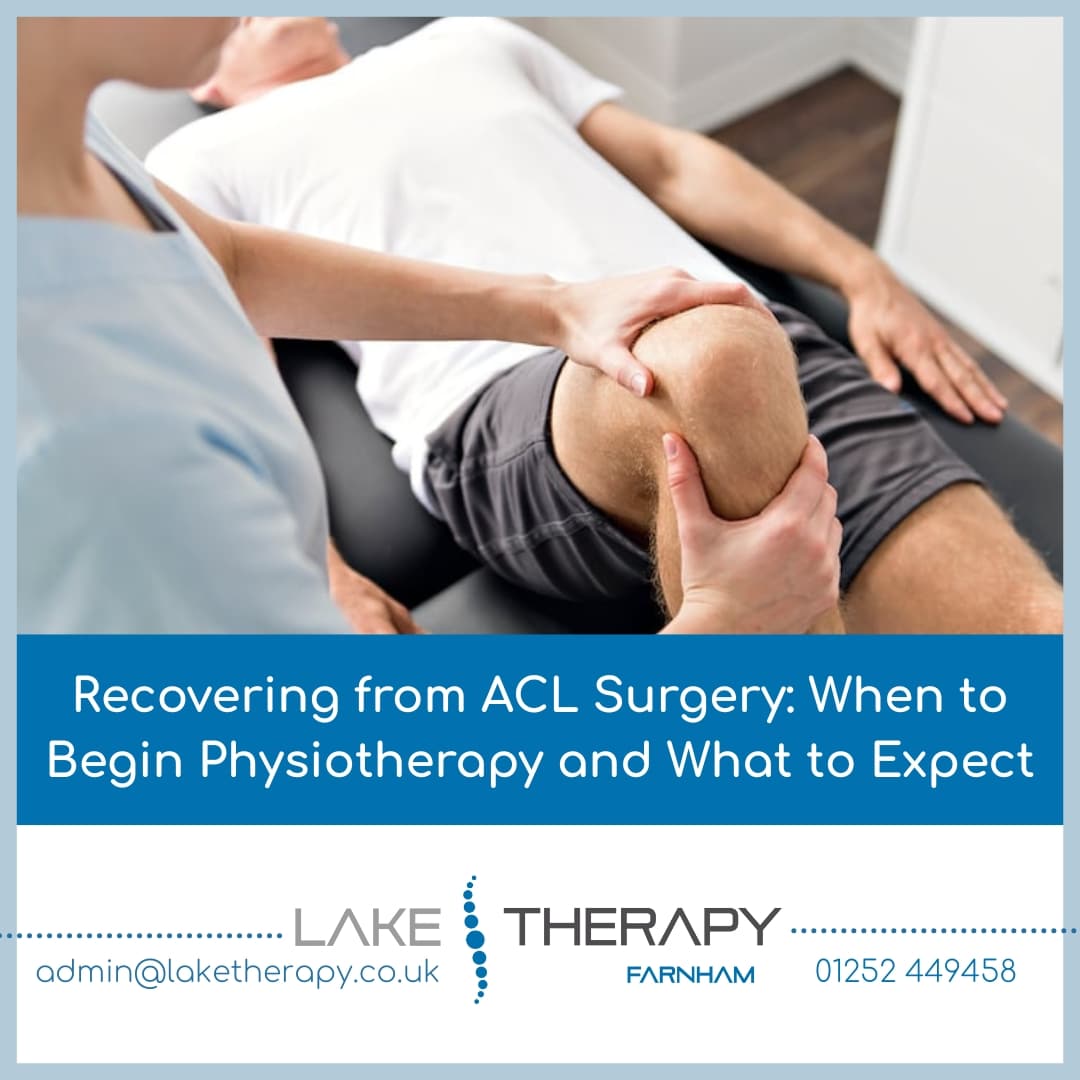
Recovering from ACL Surgery: When to Begin Physiotherapy and What to Expect
Hi, I’m Kat – physiotherapist and co-founder of Lake Therapy. An ACL injury can be one of the toughest setbacks, especially for active people or athletes. Whether you’ve had surgery or are managing a tear without it, physiotherapy is absolutely essential to your ACL surgery recovery. When you start, how you progress, and the support you receive all play a huge role in regaining strength, movement, and trust in your knee again.
You can read more on our knee pain treatment and sports injury treatment pages.
Let’s walk through what to expect—so you feel prepared, hopeful, and supported every step of the way.
Understanding the ACL’s Role in Knee Function
The ACL (Anterior Cruciate Ligament) is one of the key stabilisers of the knee. It connects the thigh bone to the shin bone and helps keep the knee steady—especially during twists, quick stops, and sudden direction changes. That’s why it’s often injured in sports like football, basketball, or skiing.
When the ACL is damaged, the knee can feel unstable, swollen, and painful—making everyday activities or sports difficult and risky.
What Happens During an ACL Injury?
Most people describe hearing a pop or feeling a sudden shift in the knee, followed by swelling, pain, and limited movement. Depending on the severity of the tear, ACL injuries are typically classified as:
- Grade 1: A mild stretch
- Grade 2: A partial tear
- Grade 3: A full rupture (often needing surgery)
No matter the grade, physiotherapy plays a vital role in ACL surgery recovery—or non-surgical recovery if your tear is being managed conservatively.
Starting Physiotherapy Without Surgery
Not every ACL tear requires surgery. If your tear is partial or you don’t plan to return to high-impact sports, a non-surgical rehab plan might be recommended.
Once swelling eases, we usually begin with:
- Bracing and protected weight-bearing (with crutches if needed)
- Gentle range of motion exercises
- Strengthening muscles around the knee, especially your quads and hamstrings
- Improving balance and stability
With consistent effort, many people return to their normal daily activities within 2–3 months—sometimes even sooner—without surgery. However, if your lifestyle is more active, surgery may still be the best option for long-term knee stability.
What to Expect During ACL Surgery Recovery
If you’ve had ACL reconstruction, physiotherapy often begins just a few days after surgery—once your pain and swelling are under control. Recovery can take 9 to 12 months, depending on your body’s healing and your personal goals.
Here’s what we focus on during each stage of your ACL surgery recovery:
Restoring Movement and Flexibility
The early days of rehab are all about gentle motion and reducing stiffness. We’ll start with exercises like:
- Heel slides
- Stationary bike (no resistance)
- Ankle pumps
- Prone hip extensions
- Gentle calf stretches
These movements help promote circulation, reduce swelling, and prepare your knee for more active work.
Building Strength and Stability During ACL Surgery Recovery
As your mobility improves, we shift our focus to building strength—especially in the muscles that support your knee.
At this stage, we may introduce:
- Isometric quad contractions
- Straight leg raises
- Hip abductions
- Glute bridges
- Knee extension exercises
The goal is to protect your new ligament, improve control, and start rebuilding confidence in your knee. It takes time, but every rep moves you closer to full recovery.
Relearning Functional Movement Patterns
Once your strength returns, we begin functional training—this usually starts around the 4- to 6-month mark. These exercises are designed to mimic real-life movements and, for athletes, sport-specific tasks.
Here’s what might be included:
- Agility drills (e.g. shuttle runs, ladder work)
- Plyometrics (light jumps and controlled landings)
- Cutting/pivoting techniques
- Acceleration and deceleration control
All these are introduced gradually, with close supervision. If you’re a high level athlete, we’ll work alongside your coach to coordinate your return to sport safely.
Completing Your ACL Surgery Recovery Plan
It’s easy to feel tempted to stop once the pain goes away or you feel “pretty good”—but seeing your rehab through to the end is one of the most important things you can do.
Finishing your physiotherapy:
- Reduces the risk of reinjury
- Improves long-term joint stability
- Restores full confidence in your body
- Helps you return to sports or daily life safely
At Lake Therapy, we tailor every ACL surgery recovery plan to your lifestyle, goals, and healing pace. Whether you’re aiming to return to high-level sport or just want to walk without fear of giving way, we’ll support you every step of the way.
Start Your ACL Surgery Recovery with Confidence
Recovering from an ACL injury is a journey—but you don’t have to walk it alone. With expert care, personalised exercises, and consistent support, you can rebuild stronger than before.
Book your Initial Consultation
Start with a full assessment and receive a personalised report of findings. We’ll help you understand what’s really going on Book your consultation now.
Book your free Discovery Call
Not sure yet? Book a friendly 15-minute call to chat through your concerns. No pressure, just a conversation Schedule a discovery call.
ACL recovery: your questions answered
When should I start physiotherapy after ACL surgery?
Usually very soon after the operation, following your surgeon’s guidance. Early work focuses on swelling, movement and getting your thigh muscles working.
Can an ACL injury be treated without surgery?
Some people manage well with physiotherapy alone, depending on their knee and their goals. It’s a decision to make with your surgeon.
How long is ACL rehab?
It’s a long journey, often around nine months or more before returning to pivoting sports.
What does ACL rehab involve?
Restoring movement, building strength and stability, then relearning running, jumping and changing direction before returning to sport.
Why is it important to finish my rehab?
Completing your plan helps protect your knee and lowers the risk of re-injury when you return to sport.
Starting your ACL recovery?
Book a free 15-minute Discovery Call with one of our physios. It’s a relaxed chat about what’s going on and how we can help.
Warmly,
Kat