
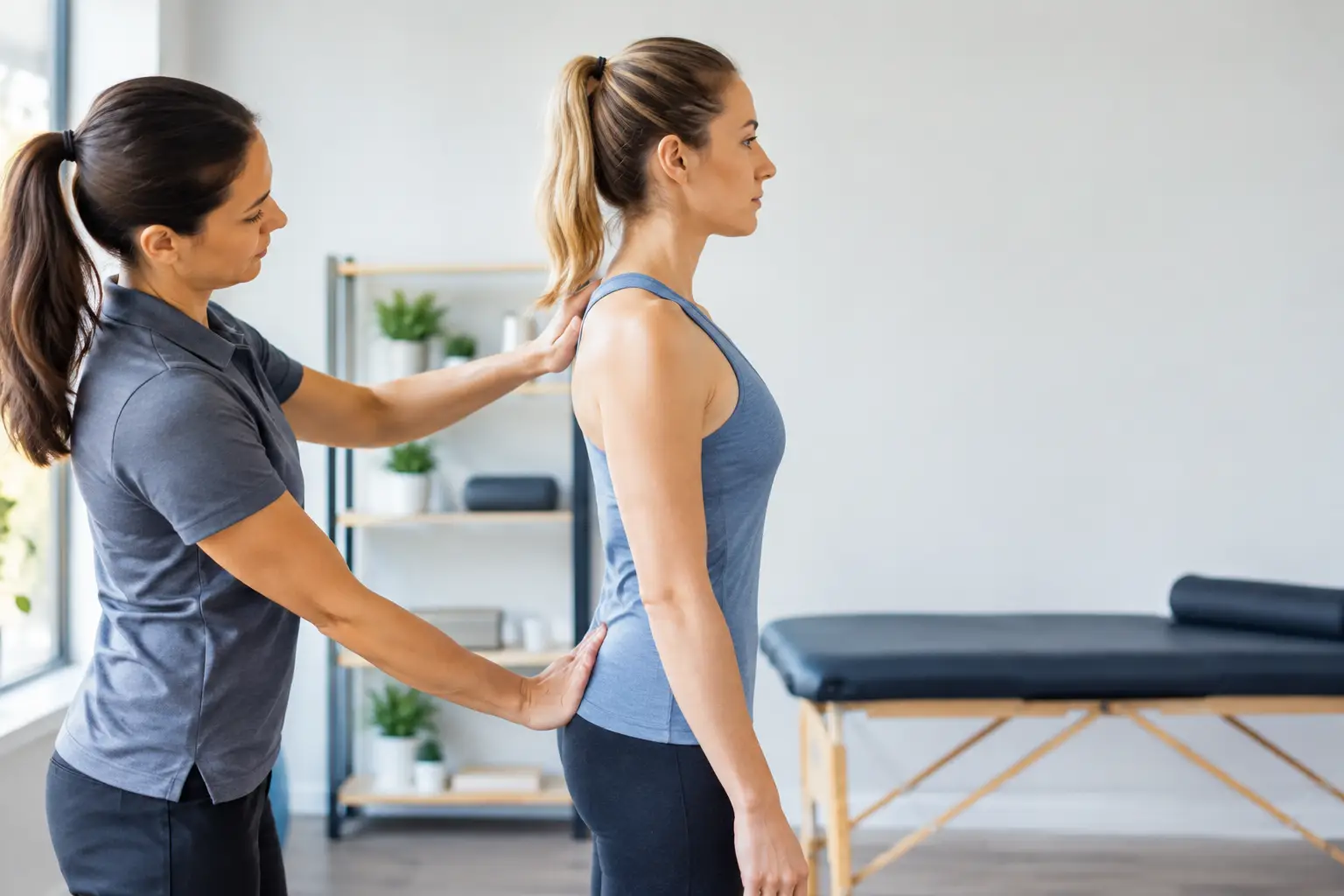
What Posture Screening Farnham Can Reveal
Sit tall for a second. Now let your shoulders drop, gently turn your head left and right, then take one slow breath into your ribs. Did that ease anything, even a tiny bit? Great. It does not mean you have found a magical fix, but it is a useful clue: your body may be asking for more movement, less tension or a different way of sharing the load.
A posture screening Farnham appointment is not about being told to sit like you have a ruler down your back all day. It is a practical look at how you stand, sit, move and cope with the demands of your actual life – laptop work, school runs, lifting, driving, gym sessions, gardening and everything in between.
Why posture can feel like a bigger problem than it is
If your neck aches after a day at the desk, your shoulders feel permanently up by your ears, or your lower back complains when you get out of the car, it is tempting to blame “bad posture”. The truth is a little kinder and more useful.
There is no single perfect posture that every person should hold. Bodies come in different shapes, have different injury histories and tolerate positions differently. A relaxed slouch is not automatically harmful, and an upright sitting position is not automatically pain-free. The bigger issue is often staying in any one position for too long, repeatedly loading one area, or lacking the strength and mobility to cope with what your day asks of you.
That is why a good screening looks beyond a photo of you standing against a wall. It connects your posture to your symptoms, your movement and your goals. If you want to pick up your toddler without wincing, finish a shift comfortably, return to tennis or simply sleep without a grumbling shoulder, that matters far more than looking textbook-perfect.
What happens in a posture screening in Farnham?
At Lake Therapy, a posture screening begins with a conversation. You will be asked where you feel pain or stiffness, when it started, what makes it worse or better, and what you need your body to do. A desk worker’s challenges can be very different from those of a builder, runner or busy parent, even if they both arrive with neck pain.
Your clinician will then observe how you naturally stand and move. They may look at how your head, shoulders, ribcage, pelvis, knees and feet work together, but this is never a hunt for flaws. It is about spotting patterns worth testing.
You might be asked to walk, squat, reach overhead, balance on one leg, turn your head or move your spine. If relevant, they may assess joint range, muscle strength, breathing pattern and control around areas such as the shoulder blades, hips or core. Small differences can help explain why one side becomes overloaded or why symptoms return after a busy week.
The science in one line: pain is influenced by tissue sensitivity, movement, strength, sleep, stress, previous injury and the total load on your body. Posture is one part of the picture, not the whole story.
The questions that make a screening useful
A screening is most valuable when it is specific. “My back hurts” is a starting point, but the details guide the plan. Does it build through the afternoon? Is it worse after lifting washing baskets, cycling, long meetings or sleeping? Do headaches start at the base of your skull? Does a previous ankle injury mean you avoid putting weight through one leg?
Your clinician should also ask what you have already tried. Some clients feel better with a standing desk, while others simply stand still for eight hours instead of sitting still for eight hours. One person may need a monitor raised; another may need stronger hips and a sensible return to running. It depends.
What a posture screening can reveal
The outcome is not usually “your left shoulder is 2cm lower”. Useful findings lead to useful action. A screening may show that your upper back is stiff, so your neck does extra work when you look up. It may reveal that a painful shoulder is being irritated by poor control around the shoulder blade, or that reduced hip movement is asking your lower back to rotate more than it enjoys.
Sometimes the most revealing finding is not physical at all. Your workstation may be fine, but you may be skipping lunch, working through breaks and holding your breath whenever emails pile up. Your body has not become dramatic. It has simply had enough.
For active clients, screening can identify movement habits that affect training tolerance. A runner with recurring calf tightness may benefit from checking ankle movement, hip control and how their training load has changed. A golfer with back pain may need a plan that builds rotational strength gradually rather than a blanket instruction to “improve posture”.
What you will do with the results
A posture screen should leave you with clear next steps, not a long list of things to worry about. Depending on what is found, your plan might include hands-on treatment for a stiff or painful area, a few targeted mobility exercises, strength work, changes to your desk set-up, pacing advice or help modifying sport and work tasks while you recover.
The best plans are manageable. If you are a mum juggling work, family and a house that mysteriously produces washing every day, an hour-long exercise routine is unlikely to happen. Two or three short movements that fit around the kettle boiling or between calls may be far more effective because you will actually do them.
You may also receive support through an online rehabilitation programme, so you know exactly what to do between appointments. Progress is reviewed, exercises are adjusted and the plan changes as your confidence and capacity improve. The aim is not to make you dependent on treatment. It is to help you understand your body and get back to doing more.
When it is worth booking an assessment
Consider a posture screening if neck, shoulder or back discomfort keeps returning, your headaches seem linked to desk work or driving, you feel stiffer on one side, or you have started avoiding activities you enjoy. It can also be helpful after an injury, when returning to the gym or sport, or before a demanding event or change in workload.
Do not ignore symptoms that are worsening, constant, severe or accompanied by unexplained weight loss, fever, numbness, weakness, changes to bladder or bowel control, or pain after significant trauma. These need prompt medical advice rather than a standard posture appointment.
You do not need a GP referral to seek private help. Lake Therapy offers convenient appointments around work and family life, including early mornings, evenings and Saturdays. There is free parking right outside the door at Sandy Farm Business Centre, Farnham, which is one less thing to wrestle with when your back is already being grumpy.
A better goal than “perfect posture”
Think of posture as a snapshot, not a verdict. The position you are in right now matters less than your ability to move out of it, tolerate the demands of your day and recover afterwards. Stronger, more mobile and better-supported bodies usually have more options – and options are what make work, family life and sport feel possible again.
If pain or stiffness has made your world smaller, start with an assessment that treats you as a whole person, not a wonky shoulder in a chair. A few well-chosen changes can be the beginning of feeling like yourself again.