
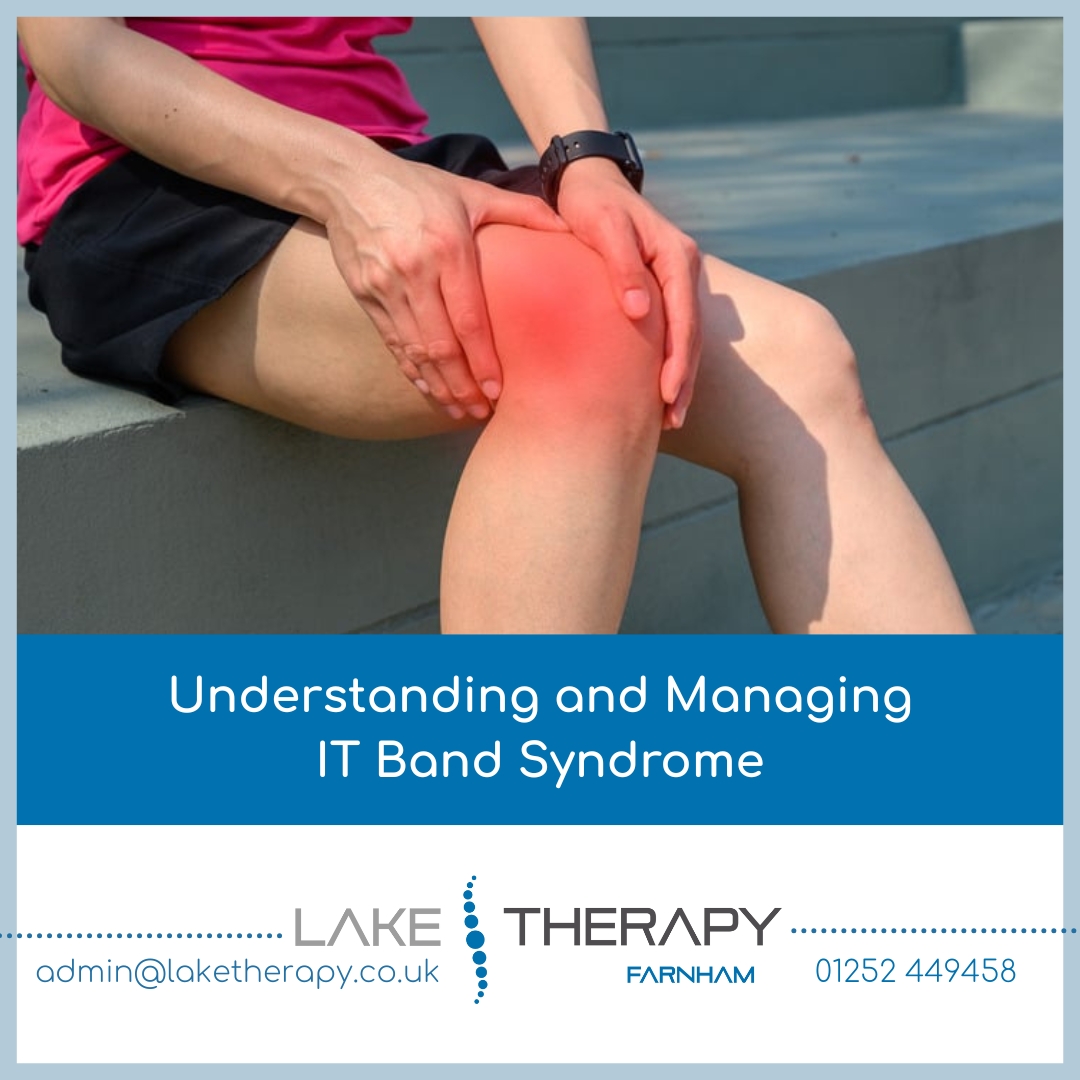
Understanding and Managing IT Band Syndrome
Hi, I’m Kat – physiotherapist and co-founder of Lake Therapy. If you’re a runner or simply love staying active, you might be familiar with that sharp pain on the outer part of your knee. It’s frustrating, often persistent, and usually worse after repetitive movement. This pain is commonly caused by IT Band Syndrome, and it’s one of the most frequent complaints I hear from clients trying to stay fit.
Fortunately, IT Band Syndrome is something we can absolutely address with the right guidance, a few key exercises, and some time. Let’s explore what it is, why it happens, and how we can help you get back to doing what you love—without the pain.
What Is IT Band Syndrome?
The iliotibial band—or IT Band—is a thick, fibrous band of tissue that runs from your hip down to just below the outside of your knee. Its main job is to stabilise your knee as you move. When the band becomes irritated from rubbing against bone, particularly near the knee, this can lead to a condition called IT Band Syndrome.
This syndrome typically shows up as sharp or aching pain on the outside of your knee. It’s common in runners, cyclists, and anyone who engages in repetitive lower limb movement. Left unchecked, it can really interfere with your training—or even your ability to walk comfortably.
Common Causes of IT Band Syndrome
What Triggers IT Band Syndrome in Active People?
I’ve seen IT Band Syndrome caused by a mix of factors—many of which can be addressed with small, consistent changes. The most common culprits include:
-
Overtraining or sudden increases in running distance
-
Worn-out or unsupportive footwear
-
Poor hip or pelvic alignment
-
Muscle imbalances, especially weak glutes or core
-
Overpronation (rolling your foot inwards while walking or running)
-
Leg length discrepancies or bow-legged posture
At Lake Therapy, we take time to evaluate how your body moves as a whole. We’re not just treating the knee—we’re identifying the underlying reasons your IT Band Syndrome started in the first place.
Stretches That Help Ease IT Band Syndrome
My Favourite Stretches to Release Tension
Stretching is one of the most effective ways to ease discomfort caused by IT Band Syndrome—especially when combined with strengthening. Here are three I often recommend:
Figure Four Stretch
-
Lie on your back with your knees bent
-
Cross your right ankle over your left thigh
-
Pull your left thigh gently toward your chest
-
Hold for 30 seconds on each side
90/90 Hip Stretch
-
Sit on the floor with one leg in front (bent at 90°)
-
Position your other leg behind you (also bent at 90°)
-
Keep your spine tall and lean slightly forward
-
Hold for 30 seconds per side
Pigeon Pose (Runner’s Stretch)
-
Begin in a lunge position
-
Bring your front foot across toward the opposite hip
-
Lower your front leg to the mat and extend the back leg
-
Hold for 30–60 seconds, keeping hips square
These stretches target the hips, glutes, and surrounding fascia—areas that often contribute to IT Band tension.
Strengthening Exercises to Prevent IT Band Syndrome
Build Stability to Avoid Future Pain
While stretching helps ease symptoms, strengthening is what helps keep IT Band Syndrome from coming back. Strengthening your hips, glutes, and core improves alignment and supports better movement patterns.
Clams
-
Lie on your side with legs stacked and knees bent to 90 degrees so your feet are in line with your bottom
-
Raise the top knee, keeping the heels together, as though opening a book
-
Lower slowly; repeat 10 times on each side
Lateral Band Walks
-
Wrap a resistance band around your ankles
-
Bend slightly at the hips and knees
-
Step sideways 10 times in each direction
-
Repeat for 3 rounds
Glute Bridges
-
Lie on your back with knees bent
-
Lift your hips to form a straight line from shoulders to knees
-
Hold for 10 seconds, lower, and repeat for 3 sets
These exercises strengthen the muscles that stabilise your pelvis and legs, reducing strain on the IT Band during activity.
Recovery Tips for IT Band Syndrome
Rest, Roll, and Rehydrate
Recovering from IT Band Syndrome isn’t just about doing the right stretches and exercises. Recovery habits are just as vital. Here’s what I recommend:
-
Take rest days between intense workouts
-
Use a foam roller on the quads and outer thigh
-
Stay well-hydrated to support tissue healing
-
Avoid pushing through sharp pain
A past client of mine saw incredible progress just by adjusting her schedule to include rest days and regular foam rolling. Within weeks, her knee pain had settled enough for her to enjoy long walks again.
How Lake Therapy Treats IT Band Syndrome
At Lake Therapy, our approach to IT Band Syndrome is always tailored to the person—not just the symptoms. We begin with a full-body movement assessment to understand what’s really causing the friction and pain. From there, we build a physiotherapy plan around:
-
Personalised strengthening and mobility exercises
-
Manual therapy where needed
-
Education about movement and training loads
-
Gait and posture analysis to reduce strain during activity
If you’ve tried stretching or self-treatment without success, don’t be discouraged. Many of our clients were in the same boat before coming to see us.
Take the First Step Toward Relief from IT Band Syndrome
If outer knee pain is holding you back from running, hiking, or simply enjoying your daily routine, you don’t have to push through it alone. Let’s figure out what’s really going on and explore a recovery plan that fits your life.
You can book an initial consultation to receive a personalised assessment and treatment plan, or schedule a free discovery call if you’d prefer to start with a friendly chat. Either way, we’re here to help you move forward with confidence.
Warmly,
Kat